What Are The Characteristics of Victorian Houses?
Victorian homes showcase elaborate ornamentation, asymmetrical facades, and a variety of decorative elements such as beautifully carved trim, intricate gingerbread detailing, and steeply pitched roofs.
The interiors of Victorian homes are marked by high ceilings, large windows, and several rooms, often reflecting the era’s societal emphasis on status and formality. For example, the living space was always separate from the dining room, unlike the favoured open-plan living floor plans many contemporary homes adopt today.
Common interior features include decorative mouldings, hand-carved woodwork, bay windows, sash windows, and stained glass windows. Multiple fireplaces were also a staple, providing both heating and a focal point for each room. The eclectic nature of Victorian design is evident across the many various architectural styles that were used at the time, these include Gothic, Italianate, and Queen Anne.
Early, Mid, and Late Victorian Architecture
If you own a Victorian house, determining whether it falls into the early, mid, or late Victorian architecture can aid in planning permissions. The Institute of British Architects, established three years before the Victorian era, formalised architecture as a profession. With the Industrial Revolution, Architectural Designers seized the chance to experiment with innovative methods and materials, leading to the abandonment of the symmetrical Georgian style in favour of more intricate and architecturally diverse designs.
Early Victorian Architecture
During the initial years of the Victorian era, the Gothic style gained popularity. Characteristic design elements of this style encompass pointed roofs, arches, and stained-glass windows. Turrets were widely favoured, and ornate embellishments such as gargoyles were commonly incorporated into architectural detailing.
Mid-Victorian Architecture
Mid-Victorian architecture prominently featured the Jacobethan and Arts & Crafts movements. Jacobethan, characterised by revived Tudor and Stuart designs, showcased steep gabled roofs, high chimneys, half-timbering, intricate brickwork, and castle-like structures.
The Arts & Crafts movement emerged as a response to the Industrial Revolution, emphasising craftsmanship also. Buildings from this era typically exhibit bare brick and stonework, sloping roofs, and wooden casement windows, evoking a cottage-style aesthetic.
Late Victorian Architecture
The conclusion of the Victorian era ushered in the unique Art Nouveau style, characterised by stained glass and fire surrounds featuring intricate details inspired by curving and plant forms.
Steps for Extending a Victorian House
One of the many ways that Victorian homeowners choose to renovate their house is to add an extension. In doing this, the home’s character can be preserved whilst ensuring that the extra space surrounding the property is maximised, which is particularly important for those with children.
Below, we have created a guide as to how to approach extending a Victorian house and the particular challenges you may face. If you would like to speak with our Architectural Designer team, please contact us for a free consultation. We will be able to provide further information and answer any questions you may have related to this guide.
Victorian House Single-Storey Rear Extension
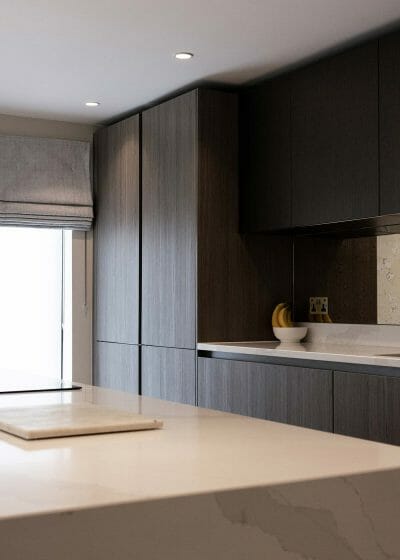
This extension type is highly popular among Victorian terraced house designs and semi-detached properties, often taking the form of a kitchen extension at the rear. Typically exempt from local conservation rules, these extensions feature a floor plan placing the living area in the front and a spacious kitchen towards the back, which can be completed with an island unit and a dining area, for example.
Large glazed doors leading to the garden and skylights are also very common, which bring much more natural light into the home. One of the main issues with Victorian terraced houses is that because of the multiple rooms in their design, they often lack light. An extension can help with this issue and make the period home feel more livable.
For the extension design itself, options range from seamlessly integrating the extension with the original architecture to making a bold modern statement with ample glass for a light and airy ambience. For those focusing on natural light more than anything else, a glass extension specifically designed for Victorian houses can add both space and aesthetic appeal.
Another benefit of a rear extension is that it allows for the possibility of maximising space even further by building upwards from the ground floor, which leads us to our next extension example.
Double-Storey Rear Victorian Property Extension
Similar to a single-storey rear extension, a Victorian house double-storey extension expands your living space without altering the facade for design flexibility. Many
Whether you are considering adding a room above an existing single-storey rear extension or planning a two-storey extension from scratch, there are many ways in which you can utilise the new space. Many Victorian terrace homeowners choose to add an en-suite to an existing bedroom with a focus on natural light, whilst home offices are also a popular option. And, if you want to create a balcony above your ground floor to add interest to a garden space, this can also be achieved through careful design and planning.
We recommend that no matter the Victorian house extension design you have in mind, to consult with an experienced Architectural Designer who can guide you through considerations. Contact Christopher David Design to share your design vision and learn more about how we can assist with our architectural expertise.
Single-Storey Side Extension on Victorian Building
Many Victorian houses feature an often-unused strip of outside space along the ground floor, which is sometimes referred to as a ‘ginnel’. If your property has a neglected side return, a side return extension or infill is a valuable option. This type of extension is common for Victorian terraced houses, adding significant square footage.
Despite the often perceived limited indoor space gain, a side extension can efficiently transform a narrow galley kitchen into a spacious kitchen-diner or enhance the functionality of an L-shaped room. The added benefit is that you might not require planning permission, as it could fall under permitted development rights. However, seeking professional advice is crucial before commencing any work, and obtaining planning permission can offer more design flexibility.
For detached and semi-detached Victorian homes, a side extension can allow for a home office, utility room, or an expansion of existing downstairs rooms.
Victorian Terrace House Double-Storey Side Extension
A double-storey side extension provides more space than a single-storey option but will require additional planning permission, which some homeowners prefer to avoid.
Many Victorian terrace houses often feature a single-storey kitchen extending from the back, offering the opportunity to extend upwards and sideways for increased internal space. However, a double-storey side extension can cause more issues with neighbours and boundary lines compared to a single-storey option.
If you do choose to go ahead with this type of extension on a Victorian property, the extra space can be highly effective when designed well. These extensions can enlarge the kitchen, upstairs bathroom, or bedroom, and may even allow for the creation of a new house altogether. And, if your property already has a single-storey side extension, adding a second storey on top may be an option with minimal disruption.
Victorian House Extension: Wraparound Design
A Victorian house wraparound extension extends two adjoining sides, like the side and the rear. If carefully designed, it may not need planning permission, but applying may offer more flexibility.
Most Victorian houses can accommodate a wraparound extension, combining a side return with a rear extension for increased internal space. This option is suitable if you seek significant room size expansion while maintaining side access to the back garden. Victorian house extension ideas are vast as you can see, with numerous design styles available.
Do you need planning permission for a Victorian terrace side extension?
In many cases, planning permission is required for significant changes to a property, including extensions. Below are some of the factors to consider that will determine whether you require planning permission.
Size of the Extension
The size of the proposed extension may impact whether planning permission is needed. There are often limits on the size of extensions that can be added without permission.
Design and Appearance
The design and appearance of the extension can be a factor. If the extension significantly alters the appearance of the property or the surrounding area, planning permission may be required.
Conservation Areas
Victorian terraces are often located in conservation areas where stricter rules may apply. In such cases, you may need permission even for minor alterations.
Permitted Development Rights
Some small extensions may be covered by permitted development rights, allowing you to proceed without planning permission. However, these rights have limitations, and not all properties qualify.
If the Victorian terrace is a listed building, additional permissions may be required.
Steps for Renovating and Maintaining a Victorian House’s Interior
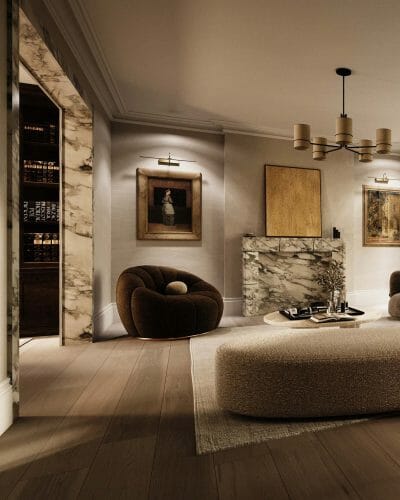
Having explored extension options for Victorian houses, it’s time to discuss interior renovations. Owning a Victorian home doesn’t restrict you to a specific interior design style; many feature contemporary interiors. The ample height and space in these homes provide room for creative design.
To modernise a Victorian terraced house, you will not have to strip away the home’s essence. Instead, you can look at blending period details with modern elements to find harmony. Christopher David Design will help you to renovate your Victorian home’s interior to suit your unique aesthetic. To discuss further details with us, please contact our team.
To maintain a Victorian aesthetic:
Begin by researching Victorian interior design styles: think about colour palettes and architectural features. Understand the era’s aesthetics to inform your choices and the vision you have for your home.
Respect the historical context of the home: and try to preserve original features whenever possible.
Evaluate the condition of existing elements: such as floors, mouldings, and fireplaces. Identify what can be restored and what needs replacement.
Develop a comprehensive plan outlining your goals: as well as budget, and timelines. Prioritise the areas in your home that require immediate attention.
Retain and restore original architectural elements: like crown mouldings, ceiling roses, and decorative tiles. This contributes to the authenticity of the Victorian style.
Choose a colour scheme that complements Victorian aesthetics: deep, rich colours such as burgundy, emerald green, and navy were popular during the period. You could also consider using wallpaper with Victorian patterns for enhanced authenticity.
Original hardwood flooring is a Victorian staple: restore or replicate it if damaged. Alternatively, consider quality carpets with Victorian patterns.
Keep lighting traditional: install chandeliers, pendant lights, or wall sconces in Victorian styles to enhance the period feel.
Choose furniture with ornate detailing: and rich materials like dark wood and velvet upholstery. Antique or reproduction pieces can complement the Victorian aesthetic.
Opt for heavy curtains or drapes: with intricate patterns and tassels to evoke the Victorian style. Consider layering with sheer curtains for versatility.
How much will an extension to a Victorian house cost?
How much it costs to renovate and extend a Victorian house depends on the project’s scope and the property’s current condition. The desired finish also plays a crucial role. Unless the work is purely cosmetic, costs can range from £20,000 to £200,000 for a standard three-bedroom property.
For extensive Victorian house renovations involving significant changes to layouts, substantial structural work, re-plumbing, re-wiring, and full redecoration, it is advisable to budget between £2,000 and £3,000 per square metre.
For moderate renovations in areas requiring less internal work without substantial layout changes or major structural alterations but involving full redecoration, re-plumbing, and rewiring, an estimated cost of between £1,500 and £2,500 per square metre is recommended.
For minor renovations in areas needing only slight improvements such as re-plastering, painting, installation of new floor finishes, and minor electrical and plumbing modifications, budgeting between £1,000 and £2,000 per square metre is suggested.
Extending and refurbishing a Victorian house can be an exciting project with a trusted Architectural Designer by your side. Whether you are considering a single-storey rear extension, a double-storey side extension, or a wraparound design, the possibilities are not limited. No matter your extension design, it is important to be able to navigate the complexities of planning permissions, architectural considerations, and budgeting.
If you are envisioning an extension for your Victorian home, contact Christopher David Design. Our experienced architectural Designers can guide you through the process, offering expert advice and a complimentary consultation to discuss your unique project.