What is a Double-Storey Home Extension?
Before we delve into the various design aspects of double-storey house extensions, we will provide you with a quick overview of this extension type.
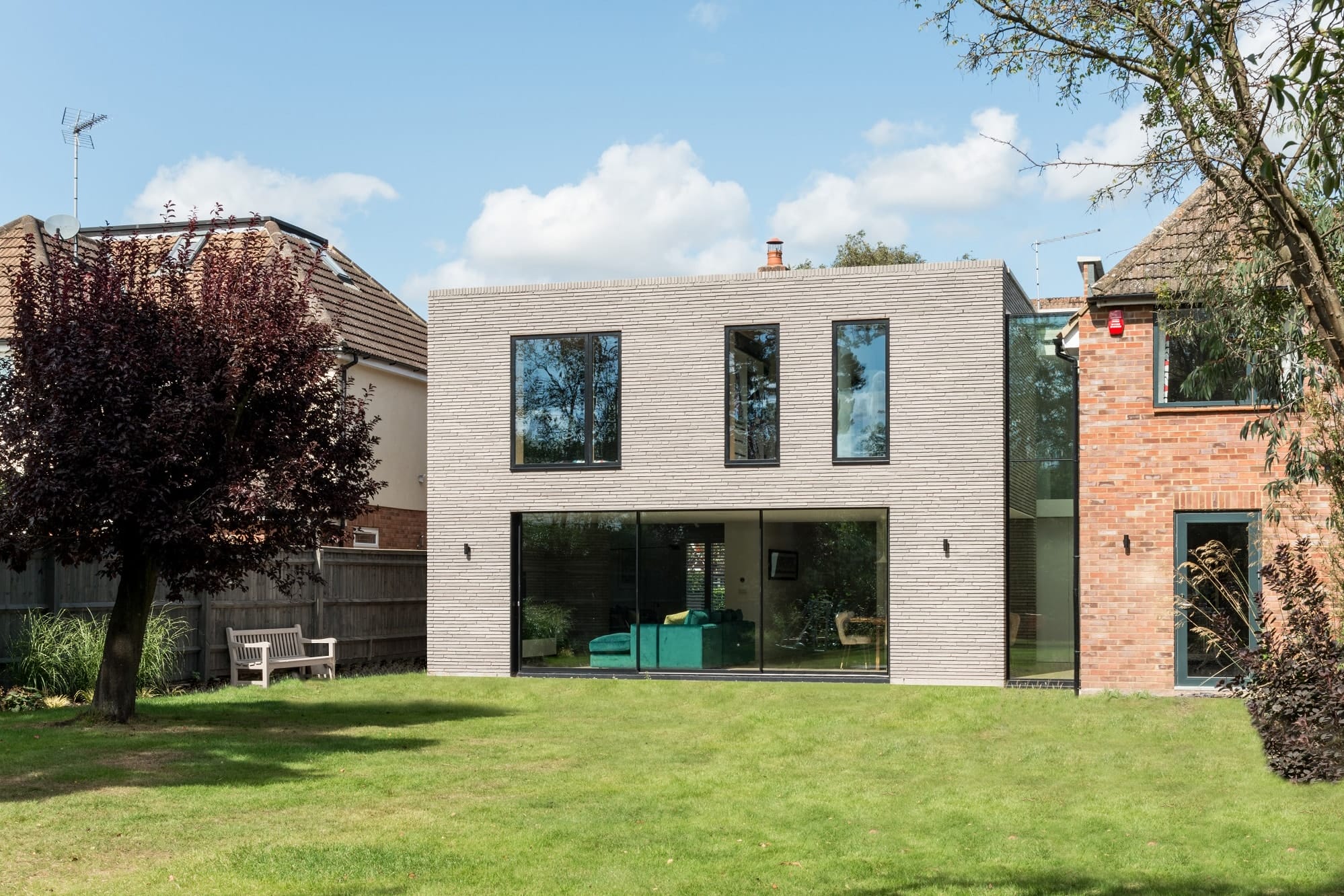
In essence, a double-storey house extension involves expanding your house horizontally and then adding an extra floor to that extension. This type of extension is also known as a ‘two-storey extension.’
If you already have a single-storey extension and wish to construct an additional floor above it, you can achieve a double-storey house extension. A double-storey extension provides many homeowners with an excellent opportunity to incorporate an additional bedroom on the upper level while expanding the lower level to accommodate a more spacious kitchen, an extra bathroom, or any other amenities you require.
What is The Most Common Double-Storey Extension Design in 2026
Below, we have provided information about the types of double-storey extensions. As you can see from the list, there are a few options, each providing varying space and design flexibility.
Rear Double-Storey Extension
Homeowners will generally opt for a two-storey rear extension when expanding their houses for many reasons. In the U.K., numerous homes boast generous back gardens, making it a logical choice for those seeking to enhance their living space.
A notable advantage of this approach is that it preserves the original facade of your house, typically earning approval from the local council. Additionally, since many homes exhibit a width greater than their depth, this type of extension results in a more square-shaped building with well-organised rooms. For those seeking to create a ground-floor extension with a floor above, this type of extension is ideal.
Side Double-Storey Extension
If your home is not a terraced house, there is a possibility of constructing a side double-storey extension. However, obtaining planning permission is essential in this case, as permitted development rights don’t apply as per building regulations set out by law.
The main advantage of this type of extension is that a double-storey extension on the side expands the width of your house, which means you can enhance your kitchen and living area or incorporate additional bedrooms.
We suggest that you think about the following questions before discussing your plans with a trusted Architectural Designer:
- What is the purpose of your double-storey extension? (i.e. to create more space in an existing room, to create a new room altogether, to create a balcony and open up the ground-floor plan?)
- What is your budget?
- Have you factored in the process of gaining planning permission?
- Have any of the properties in the neighbourhood been extended or renovated? (This will provide you with an insight as to what is feasible and what the council may be adverse to).
Permitted Development Rights to Build a Double-Storey Extension
Permitted development rights enable you to undertake certain alterations to your house without the need to apply for planning permission. As a general guideline, this approach tends to expedite the process, reduce your double-storey extension cost, and simplify matters.
With this said, permitted development rights typically do not extend to most two-storey house extensions. However, there are specific situations where they may be applicable. For this to be the case, your proposed work must adhere to the following criteria:
- The double-storey extension must not exceed a depth of 3 metres on both floors. If you already have an extension surpassing this depth, additional construction on top of it using permitted development, the construction work will not be allowed.
- The eaves of the double-storey extension should not surpass the height of the existing eaves, or the roof of the extension must not exceed the height of the original house’s roof.
- If the double-storey extension comes within two meters of your land boundary, the eaves should not exceed a height of three meters.
- The double-storey extension must not incorporate balconies, verandas, raised platforms, microwave antennas, chimneys, or any modifications to the existing house’s roof.
- External materials used in the new double-storey extension should match those of the existing house.
- Similarly, the roof pitch of the double-storey extension should closely resemble that of the original house.
- The land designated for the double-storey extension must not be within seven metres of any land boundary or extend beyond the rear wall of the original building by more than three meters.
- If constructing a side elevation and intending to install a window on the first floor, it must be obscure-glazed and non-opening unless the opening part is higher than 1.7 meters from the room’s floor.
It is essential to note that you won’t qualify for permitted development if you are planning to build a double-storey extension to the side of your home or reside in specific protected areas, such as a conservation area, an Area of Outstanding Natural Beauty, or a national park.
You can read more about planning permission for a double-storey extension in our guide.
What If My Extension Does Not Comply With Permitted Development Rights?
If your two-storey extension fails to comply with the permitted development rights regulations, you will be required to submit a householder planning permission application for its construction.
This entails a lengthier process before commencing the building phase. Additionally, you need to consider the aesthetic approval from the council for your extension. Planning officers will scrutinise whether it aligns with various local policies, including the appearance of the existing house and how it harmonises with the neighbourhood.
Experienced Architectural Designers and Planning Consultants will help you to formulate your design, create planning drawings, and prepare a design and access statement to provide grounds for obtaining planning permission for the two-storey extension.
Contact Christopher David Design to begin your design process, we can help you to create a double-storey extension aligned with your unique requirements.
What is the Average Cost of a two-storey Extension?
Providing an exact figure is challenging, as it depends on various factors including the necessary foundation type, probable construction methods, associated structural strategies, and the desired levels of fixtures, fittings, and material finishes. Nonetheless, we can offer a general estimate.
For a double-storey extension in London, the cost is likely to fall within the range of £2,000 to £4,000 per square metre. Two-storey extension project will often result in a considerable increase in the overall value of your house, sometimes ranging from £4,000 to £6,000 per square metre.
How to Design Your Double-Storey Extension
In this section, we will cover various design considerations for your double-storey extension. Our Architectural Designers can help you from project initiation through to design drawings and construction, amongst many other aspects.
Planning Your Ground Floor Level
Initially, the use of your new ground floor space is contingent on your specific requirements. For instance, if you intend to work from home, it could serve excellently as a home office. Alternatively, if you aim to enhance your kitchen, you have the opportunity to create a generous open-plan living-dining area.
Layout Designs for Upstairs
Typically, individuals opt for a bedroom in the upper portion of their new extension, but there is no strict rule dictating such a choice. The new space could also connect to an existing room in the form of an en-suite, for example.
The doors you select will have a profound impact on the overall design of your extension, which is an exciting part of the build. Finding the right doors for your lifestyle is crucial, for example, if you have a young family you may need to consider safety implications.
The most common types of doors used in these types of extensions are bi-fold and sliding doors, both of which allow plenty of natural light to enter an interior space. Sliding doors can also create the illusion of a larger ground floor since they can be opened during the warmer months out onto the garden space.
Exterior Materials
While some homeowners opt for using the same materials as the existing building to create an appealing aesthetic, you also have the option to experiment with new materials for added contrast and design flair.
We recommended exploring environmentally friendly alternatives or considering cost-effective metal cladding options that achieve a contemporary double-storey extension. One example is the use of reclaimed timber or brick is highly effective and also contributes to environmental sustainability.
Finding an Architectural Designer that you can trust can involve some research. We recommend having important discussions early on; if you co-own a house with a partner, you will need to align your design visions. The next step is to establish a realistic budget for your double-storey extension project. This is not always an easy step, and quite often, homeowners struggle to stay within desired budgets.
This can be avoided by working with a recommended, skilled extension Architectural Designer. Christopher David is well-versed in planning restrictions and building regulations nationwide and if your property falls under specific categories such as a listed building or a conservation area, we also specialise in these types of homes.
Design Fees and Cost Considerations
Outside of design fees that you will pay an Architectural Designer, there are other cost considerations to keep in mind. Below, we have included further details:
Planning Application Fees
While there are instances where you can proceed with building a double-storey house extension without planning permission, often it is required. The application fees can range from £200 to £400, contingent on your location within the UK and the specific regulations set by your local council.
Building Control Fees
Upon completion of your extension, obtaining a building control certificate is essential to confirm that the work aligns with current building regulations. Although the fee varies based on the assessment’s complexity, it typically hovers around the £950 mark.
Architectural Designer’s Fees
Architectural Designer fees usually fall within the range of 8-12% of the overall build cost. However, the specific amount can vary based on the rates charged by the architectural team you choose. It’s crucial to note that opting for the cheapest option might not yield the best outcome. Investing more initially can often lead to better results in the long term.
Structural Engineer’s Fees
Similar to other fees, the cost charged by a structural engineer depends on the project’s scope. On average, this process incurs a cost of about £1500.
What is a Party Wall Surveyor Fee?
If your planned extension involves excavation or construction near your property’s boundary, obtaining party wall agreements with your neighbours is most likely necessary. The associated process can range in cost from £1000 to £1800 per neighbour, depending on the project’s complexity. If the extension work is closely tied to party walls on both sides, with neighbours on both sides, the expenses will be doubled. However, if your neighbour consents to the proposed work, the involvement of a surveyor may not be necessary, allowing you to avoid these fees.
Regardless, several factors can influence the cost of your design, including the chosen materials, design complexity, preferred fixtures and fittings, and the extent of structural changes planned for the existing building. Location is also a factor, generally speaking, properties in London and southeast England command higher base prices, while the North may offer more affordable options.